In an interview with The Guardian, Byung-Chul Han states that “humans have degenerated into organs of the capital.” One can easily twist Han’s claim and say that humans have degenerated into organs of Generative AI (genAI), and that of techno-capital.
Signs of this degeneration are everywhere: from Tony Blair’s Institute which outsourced research work to ChatGPT back in 2024, to Deloitte’s AI fiasco report for Australian Government, filled with hallucinations. If this happens to some of the most well-resourced entities at the global level, what can one expect in other domains of society?
This is also the worry of many professors, teachers, and parents who, faced with the disruptive character of genAI, are still figuring out how to navigate the chaos it has brought into universities, classrooms, and houses, and what is educationally desirable and purposeful in dealing with such chaos.
Of course, the answer to such a big question cannot be developed in this rather brief note. However, my aim is to share a little story from everyday life. A story that explores human-world relations, and discusses desires and environmental injustices with a five-year-old son.
A book, a jar of Nutella, and a generative theme
We are lucky to live in a city where the civic infrastructures—what is considered a public common good—from public parks to neighbourhood libraries, are well maintained, relatively well-funded, and serve as spaces of aggregation for children1, young people and adults.
While visiting our neighbourhood library one day of spring last year with my son, I came across a Greenpeace illustrated book, There’s a Rang-Tan In My Bedroom. The story tackles the issue of palm tree deforestation for the production of chocolates and other goods—a long-fought campaign by Greenpeace. As soon as I skimmed through the book, and knowing that my son is a big fan of Nutella (which uses palm oil in its production), the first thing that came to my mind was Paulo Freire.

In chapter 3 of Pedagogy of the Oppressed, Freire introduces the concept of “generative themes.” Grounded in philosophical anthropology, generative themes, for Freire, “contain the possibility of unfolding into again as many themes, which in their turn call for new tasks to be fulfilled.” (pg. 102)
The totality of interacting themes in a given epoch constitutes what Freire calls the “thematic universe.” This universe is structured in concentric circles, moving from the universal to the particular. At the broadest level, Freire identifies the fundamental theme of the modern epoch as domination, with its dialectical counterpart, liberation. Within this broadest circle, one finds continental and regional themes (such as underdevelopment and dependency in the Third World), national themes, and finally local or sub-area themes that reflect the specific contradictions of a particular community.
This architecture is important because it means that every local situation is always already connected to larger structural realities, even if the people living in that situation cannot yet perceive those connections. The task of thematic investigation is precisely to help people move from fragmentary awareness of their immediate conditions toward a grasp of how those conditions relate to the broader whole.
What about a five-year-old kid who may not have even a piece of awareness of what is happening with palm trees in Sumatra? I thought I’d give it a try.
The dialogue
I took the book from the library shelves and, after explaining what it was about, asked him if he was interested to hear the story of the orangutan. He agreed. As soon as the story of deforestation entered into play, the first reaction of my son was: “Why do they cut the trees?” I answered: “Because these special trees produce a special oil which is used to produce different types of chocolates, shampoo… and even the Nutella that you like.” He stared at me, paused for a moment, and said: “I want Nutella.”
Of course, one of the purposes of generative themes is to evoke strong emotions, generally negative ones. This helps move the person from a position of sleep into one of awakening. This methodological investigation is perhaps one of the most accessible, most low-cost resources that can genuinely contribute to what Gert Biesta calls the subjectification dimension of education.2
The surprise came a couple of days later. Upon return from school, my son came to me and said: “Do you know that the father of my friend works in a chocolate factory?” Myself, having no clue where he was heading, responded simply that that’s cool and I didn’t know. He looked at me and then said: “I told her that they will cut all the forests to produce chocolate.”
I replied: “Maybe… but maybe they don’t need the oil from the trees, because not all chocolates use that oil”—while realising that he was already relating his own lived experiences to those of the world. I then asked him: “Would you give up your Nutella?” He looked worried and in a brittle tone said: “But I like Nutella…”
While he could relate his experiences to the world, he could not yet relate his desires to the world. Asking “Are my desires desirable for Others and the World?” is perhaps an ambitious aim for a five-year-old.
Generative themes without generative AI
While many aspects of subjectification are immeasurable through standardised tests and PISA scores, I find it a key dimension that, if used properly, brings about political-ontological disruption among children and youth.
Could an LLM have produced the same disruption? I don’t think so, and the reasons go beyond technical limitations.
Since the launch of generative AI chatbots, the number of papers on “dialogical learning” and “Socratic learning” has exponentially increased. Many forget that dialogue as such is not a conversation in the ordinary sense. For Freire, dialogical learning is a shared act of praxis— reflection and action upon the world undertaken by subjects who are mutually committed to transforming concrete reality.
The dialogical encounter between educator and student is oriented toward a shared object: the existential—singular—situation they both inhabit and seek to change. An LLM does not inhabit any situation. It has no stake in the world being discussed, no experience of limit-situations3, no felt relationship to the contradictions under investigation. When Freire says the generative theme exists only in the human-world relationship, he is specifying a condition that an LLM structurally cannot meet.4 The model can discuss themes, but it cannot have them, because it does not live in a world that presses on it, constrains it, or calls it to action.
Freire’s entire framework assumes that coming to critical consciousness is an event in a life. When participants in a culture circle decode a codification and achieve a “perception of their previous perception,” something happens to them as situated beings: their relationship to their reality changes, and with it their capacity for action. This is vividly exemplified in the 1988 movie They Live, where the homeless character John Nada—one can note the irony of the surname—finds sunglasses in an abandoned church. He puts them on and walks across downtown. When he looks at advertisement billboards he no longer sees the advertisements but decodified messages: “obey,” “marry and reproduce,” “no independent thought,” “consume.”
While LLMs can process language with extraordinary sophistication and draw on vast amounts of text on which they were trained, they do so without understanding what that language is for the speaker. They are intentionally designed to satisfy a desire, not interrupt and problematise it; they look at the person outside the screen as an attention to be captured for as long as possible so it can be fully monetised; their inherent brittleness—from hallucination to sycophancy—makes them inappropriate, for now, in any critical pedagogical endeavour.
Before concluding, I would like to bring one last point. Silence.
Freire says that when a community cannot articulate its generative themes, the educator’s task is to sit with that silence, to recognize it as itself a theme.The theme of mutism produced by the overwhelming weight of oppression. The silence is not empty. It is full of suppressed speech, internalized prohibition, the cumulative effect of having been told for generations that your words do not count.Yet it is precisely the lack in silence itself that is liberatory — an unauthoritative, unhegemonized, fertile space where we construct and reconstruct. The pedagogical act in that moment is to not fill the space, but to hold the discomfort. To let the silence become visible as silence, so that it can eventually be named, investigated, and overcome — not by the educator supplying what the community cannot yet say, but by creating conditions patient enough for speech to emerge on its own terms.
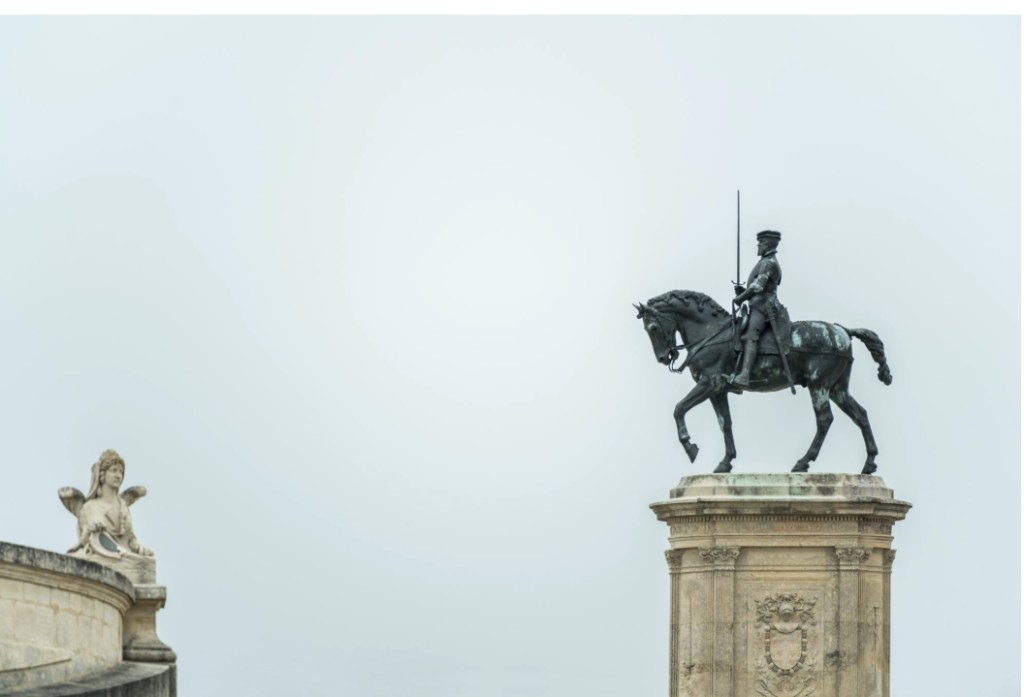
Photo courtesy: Ottavio Tomasini
LLMs are answering machines. Their functioning, training objective, and entire reason for existing as a product demand that they just answer. Every architectural and commercial incentive points in the same direction: when a human presents an input, produce an output. Produce it fluently, produce it fast, produce it in a way that the human finds satisfying enough to continue the interaction. The silence that Freire treats as an important pedagogical object is, from the perspective of the system, simply a gap to be filled. Because the product logic demands it. A tool that responded to a struggling user’s half-formed thought with sustained, generative silence would be rated as broken.
LLMs today resonate with Borges’ Funes the Memorious: entities of total retention and zero comprehension, buried under the weight of everything they have ingested, incapable of the one cognitive act that matters.5 Freire’s critical pedagogy, like Biesta’s subjectification, resonates instead with Melville’s Bartleby: a figure of quiet, non-violent refusal, a withdrawal of compliance from the machinery of the expected that, in its very stillness, makes visible the entire apparatus of authority and normalization operating behind every demand to perform, produce, respond.6
When my son paused, looked worried, and said “But I like Nutella,” he was neither Funes nor Bartleby — he was something more fragile and more promising: a subject in formation, caught between desire and dawning awareness, not yet able to refuse but no longer able to not know. No LLM could have brought him to that threshold, because that threshold is not made of information but of felt contradiction between one’s own wants and the world’s wounds.
The organs of generative AI do not pause. They do not stand, even for a moment, in the difficult space between desire, responsibility, and the world. They answer, and in answering, they (en)close the very opening through which a subject — five years old or fifty — might appear.
Perhaps we have not only degenerated into organs of degenerative AI and techno-capital but—to twist another of Han’s memorable lines—we are too alive to realise it, and too dead to refuse it.7
- One policy that libraries have adopted here is to issue membership cards directly to children. My son can use his own card to borrow books — a small institutional act that recognises him not as an appendage of a parent but as a subject in his own right, with his own relationship to a public commons. ↩︎
- See: Biesta, G.J.J. (2010). Good Education in an Age of Measurement: Ethics, Politics, Democracy. Boulder, CO: Paradigm Publishers; Biesta, G.J.J. (2022). World-Centred Education: A View for the Present. London/New York: Routledge. ↩︎
- Limit-situations are the concrete historical constraints that define people’s horizons of possibility: conditions of exploitation, illiteracy, dependency, marginalization, domination, war. Freire draws on Álvaro Vieira Pinto’s reformulation of the concept (originally from Jaspers): limit-situations are not impassable boundaries where possibilities end, but real frontiers where new possibilities begin.
↩︎ - Perhaps this may change if “world models” — which aim to understand the dynamics of the real world, including physics and spatial properties — become a reality. But for now, we are very far from that. ↩︎
- Borges, J.L. (1944). ‘Funes el memorioso,’ in Ficciones. Buenos Aires: Sur. [English translation: ‘Funes the Memorious,’ in Labyrinths: Selected Stories and Other Writings, trans. J.E. Irby. New York: New Directions, 1962.] ↩︎
- Melville, H. (1853). ‘Bartleby, the Scrivener: A Story of Wall Street,’ Putnam’s Monthly Magazine, November–December 1853. ↩︎
- Han, B.-C. (2015). The Burnout Society. Stanford: Stanford University Press, p. 51: “They are too alive to die, and too dead to live.” ↩︎
Leave a Reply